

Content Marketing for B2B: How Leading Brands Build Influence and Drive Results
Content marketing for B2B is challenging — characterized by long sales cycles, multiple stakeholders, and the need for measurable ROI. The key to success is building a sales-driven content strategy that aligns directly with buyer journeys, delivers tangible value, and drives revenue growth.

B2B content marketing isn’t quite the glamorous cousin of its B2C counterpart, is it?
While B2C brands can lean on emotion, flashy visuals, or viral campaigns, B2B marketers face different pains: long buying cycles, multiple decision-makers, and content that needs to do more than entertain — it has to convince.
And yet, the pressure to deliver measurable results hasn’t let up.
According to a recent survey by the Content Marketing Institute, 70% of B2B marketers report that creating content that engages prospects and drives conversions is their top challenge.
Add the rise of AI-driven search, increasing content saturation, and higher buyer expectations, and it’s no wonder so many marketing leaders feel stuck between the proverbial rock and a hard place.
The good news? It doesn’t have to be this way. Done right, content marketing for B2B can be a revenue-generating engine that not only builds credibility but also fuels sales. And the brands getting it right aren’t just lucky — they’re strategic, data-driven, and purposeful in their approach.
Why B2B Content Marketing Is Hard
Here’s a reality: B2B buyers are savvy, impatient, and well-researched. Gartner reports that buyers complete nearly 70% of their decision-making process before even engaging with a sales rep. That means your content must earn trust, communicate value, and provide insight before a single conversation begins.
Complicating matters further, most organizations struggle with fragmented messaging. Marketing produces content, but it often exists in a vacuum, disconnected from sales, product, or customer experience. The result? Generic white papers, endless blog posts, and campaigns that feel like they were written by committee — valuable effort, wasted potential.
Take, for example, a mid-size software company trying to scale its thought leadership program. They were producing blogs, case studies, and eBooks, but conversion rates were flat. Upon investigation, they realized their content wasn’t mapped to buyer personas or decision stages. Prospects weren’t finding the content relevant — it was like handing out maps in a city the visitor had never heard of.
Evidence-Based Challenges in B2B Content Marketing
The numbers back this up. HubSpot research indicates that 61% of B2B marketers cite generating leads and website traffic as their primary challenge. And Forrester reports that companies that fail to optimize content for the buyer journey lose more than half of their potential leads to competitors who communicate more effectively.
These aren’t minor gaps — they’re lost opportunities that directly impact revenue.
The insight here? Content alone isn’t enough. It needs purpose, context, and precision. Without a strategy, you might be creating content, but you’re not creating results.

What Makes B2B Content Marketing Work
So, what separates high-performing B2B content from the noise? It starts with alignment and relevance. Top brands map content directly to buyer personas and the stages of their decision-making journey. They don’t just publish; they publish with purpose.
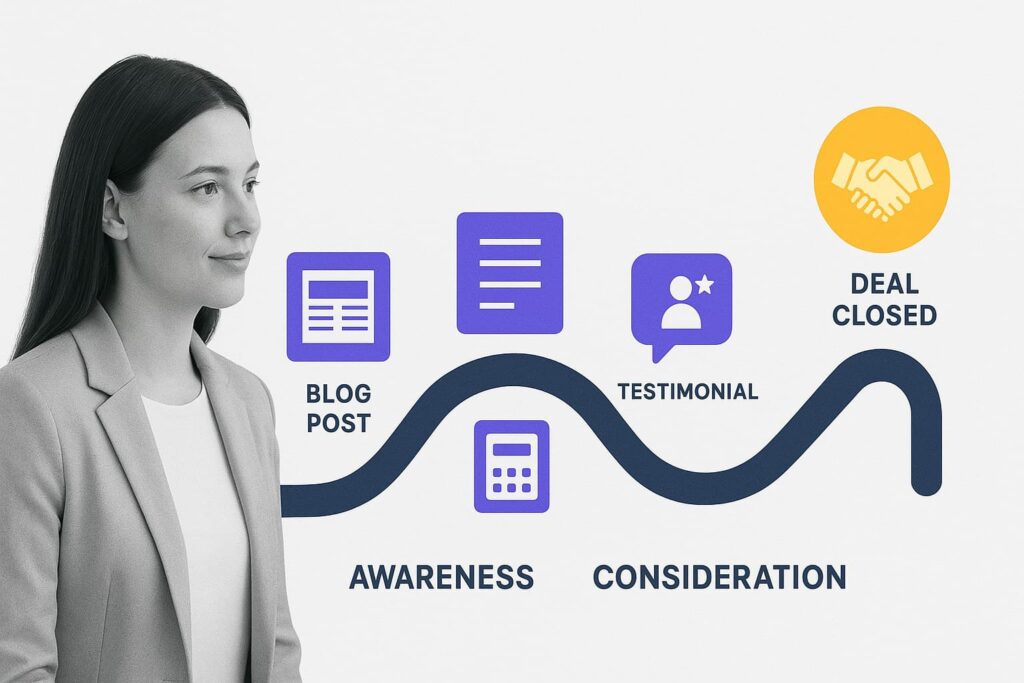
Consider a global industrial manufacturer launching a new SaaS-based supply chain tool …
By analyzing past sales conversations, marketing discovered that prospects repeatedly asked about ROI and integration complexity. Instead of producing generic brochures, they created a series of interactive ROI calculators and industry-specific testimonials.
Engagement skyrocketed, and the content became the go-to resource for their sales team — turning what was once a static content repository into a dynamic, revenue-generating engine.
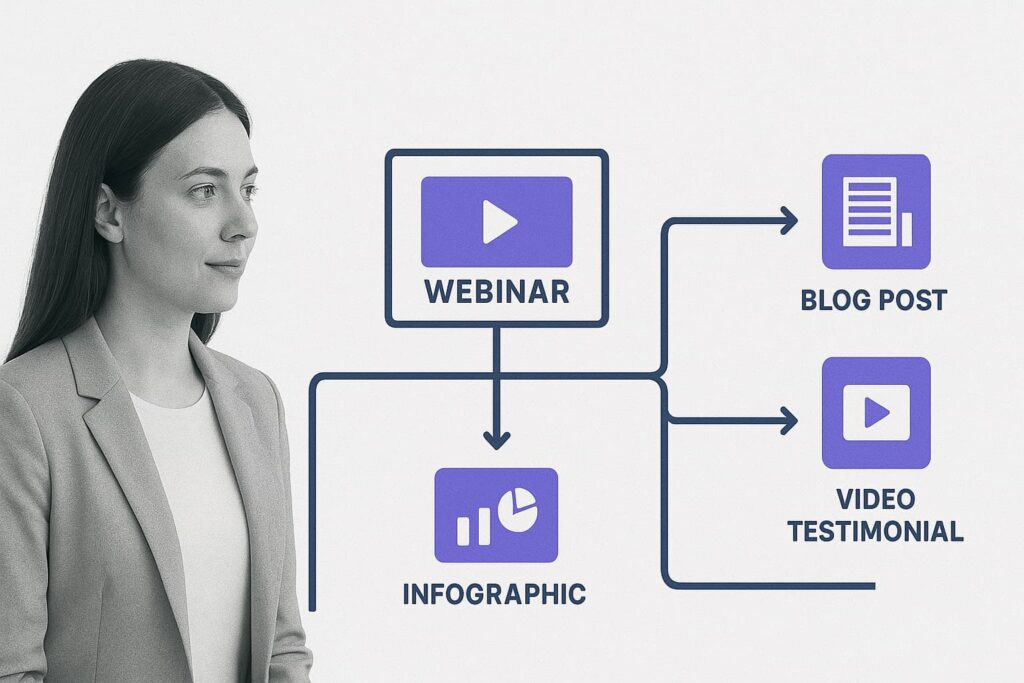
Another key factor is multi-channel distribution. High-performing brands understand that prospects encounter content in multiple places — including LinkedIn, email, webinars, and direct interactions with sales reps.
By repurposing content intelligently and tailoring it for each touchpoint, B2B marketers increase both reach and relevance.
Actionable Steps to Start Solving the Challenge
Here’s where theory meets practice. Marketing leaders can start making an impact today with these actions:
1. Audit Existing Content
Identify gaps, redundancies, and high-performing assets. Determine which pieces align with buyer personas and stages.
2. Map Content to Buyer Journey
Ensure content addresses awareness, consideration, and decision stages. Tailor messaging to the unique questions and pain points at each stage.
3. Align Marketing and Sales
Break down silos. Use sales insights to guide content creation and measure impact in terms of pipeline and revenue.
4. Leverage Data and SEO Insights
Identify the topics your audience searches for, including long-tail and semantic keywords. Focus on intent, not just volume.
5. Repurpose High-Performing Content
Turn webinars into blogs, blogs into infographics, and case studies into video testimonials.
Maximize value from your best-performing assets.
Aha Moments About B2B Content Marketing
Vertical Isn’t About Limiting — It’s About Accelerating
Many companies fear that focusing on a specific industry or niche will shrink their market. But specialization actually accelerates growth. When your messaging resonates as industry-specific, you’re no longer selling — you’re solving.
It’s Not Just About Content — It’s About Context
A case study in isolation is impressive. A case study framed around a prospect’s specific pain points in their industry? That’s compelling. Often, you don’t need more content — you need smarter context.
The Best Strategies Are Sales-Driven First
The most effective content starts with sales. Listening to objections, questions, and recurring challenges gives you material that feels custom-built for the buyer’s reality.
Content Isn’t Just “Another Campaign” — It’s a Business Strategy
A thoughtful content marketing plan influences product development, pricing, partnerships, and customer experience. Done right, it strengthens your entire business footprint.
The Proof Is the Differentiator
Buyers don’t just want to know your solution works — they want to see proof it works for companies like theirs. Industry-specific case studies and benchmarks turn features into tangible results.
Advanced Insights for Long-Term Impact
As B2B marketing evolves, so too should your approach. AI-driven content recommendations can surface trending topics, predict content performance, and suggest personalization strategies at scale. Personalization isn’t just a nice-to-have; it’s expected.

Additionally, consider building content that anticipates objections and addresses them preemptively. The best content often answers the questions a buyer hasn’t even asked yet, reducing friction and accelerating the decision-making process.
Ultimately, adopt the principle of continuous improvement. High-performing B2B content programs are never “done.” They evolve in response to market dynamics, buyer behaviors, and product innovations. Measuring engagement, iterating on messaging, and refreshing content are the keys to staying relevant and effective.
Summary & Key Takeaways
Content marketing for B2B isn’t just about filling a blog calendar or producing a white paper every quarter. It’s about strategy, alignment, and insight. The brands that succeed are those that understand their audience deeply, create context-rich content, and tie every asset to a tangible business outcome.
By auditing your content, aligning with sales, mapping to the buyer journey, and embracing advanced insights like personalization and AI, you can transform your content marketing from a check-the-box exercise into a strategic engine for growth.
Remember: in B2B, content isn’t just king — it’s the bridge between awareness and revenue. Get it right, and you’re not just publishing; you’re closing deals.


Want to Stay Ahead of Your B2B Competitors?
Every marketing professional faces pressure to deliver growth and prove ROI.
We’ve distilled insights from top-tier sources to create a strategic guide that helps leaders like you transform challenges into opportunities.
FAQs
What makes content marketing for B2B different from B2C?
B2B content marketing focuses on long buying cycles, multiple decision-makers, and ROI-driven messaging. Unlike B2C, it must align tightly with buyer journeys and sales enablement.
How can B2B marketers prove content marketing ROI?
ROI can be measured by linking content to pipeline influence, lead quality, and sales velocity. Aligning marketing with sales ensures content drives revenue impact, not just traffic.
What content works best for B2B lead generation?
High-value assets, such as case studies, ROI calculators, webinars, and industry-specific thought leadership, drive leads by addressing buyer pain points and demonstrating the value of solutions.