

Create Marketing Content That Buyers Actually Want to Read
Most marketing content fails because it’s not written for buyers — it’s written for brands. To create marketing content that buyers actually want to read, focus on three key elements: relevance to their pain points, progress toward their goals, and interaction that makes the content both useful and informative.

Let’s be honest with ourselves: most marketing content is ignored. It’s not just skimmed. Not “put aside for later.” It’s either ignored … deleted … or forgotten. You’ve probably done it yourself — opened a white paper that sounded promising, realized it was 20 pages of vague fluff, and closed it before the first chart loaded.
The irony? That same white paper likely required a small army of marketers, writers, and designers to create, taking three weeks and thousands of dollars. All that effort, only to end up in someone’s downloads folder graveyard.
And here’s the kicker: B2B buyers don’t hate content. They crave it. According to Demand Gen Report, 62% of B2B decision-makers say they rely more on content than they did a year ago to inform purchase decisions. So, the problem isn’t that buyers don’t want content. The problem is they don’t want your content — not if it’s generic, irrelevant, or designed more for you than for them.
That’s the brutal truth. But it’s also an opportunity. If you can figure out how to create marketing content buyers actually want to read, you’re instantly ahead of most of your competitors. And that’s what we’re about to tackle here.
The Content Credibility Gap
Let’s start with evidence. Because this isn’t just one jaded content marketer’s opinion. The numbers are ugly. Edelman and LinkedIn surveyed more than 3,000 B2B executives and found that 71% of decision-makers say that half or more of the thought leadership content they consume is irrelevant. That’s right: most of what we produce as marketers isn’t just underperforming — it’s actively turning buyers off.
Another statistic: Forrester reports that 68% of B2B buyers say they prefer to research online rather than interact with a sales rep early in the process. Translation: your content is your sales team’s first impression. If it’s bad, you don’t get a second chance.
And here’s the ROI killer: Gartner found that 77% of B2B buyers describe their last purchase as “very complex or difficult.” Content is supposed to make the journey easier. Instead, it often makes the confusion worse.
So we have a credibility gap. Buyers are overwhelmed, skeptical, and quick to dismiss content that doesn’t serve their needs. Which means the bar isn’t just higher than it used to be — it’s on another level entirely.

Why Buyers Ignore Your Content (And How to Fix It)
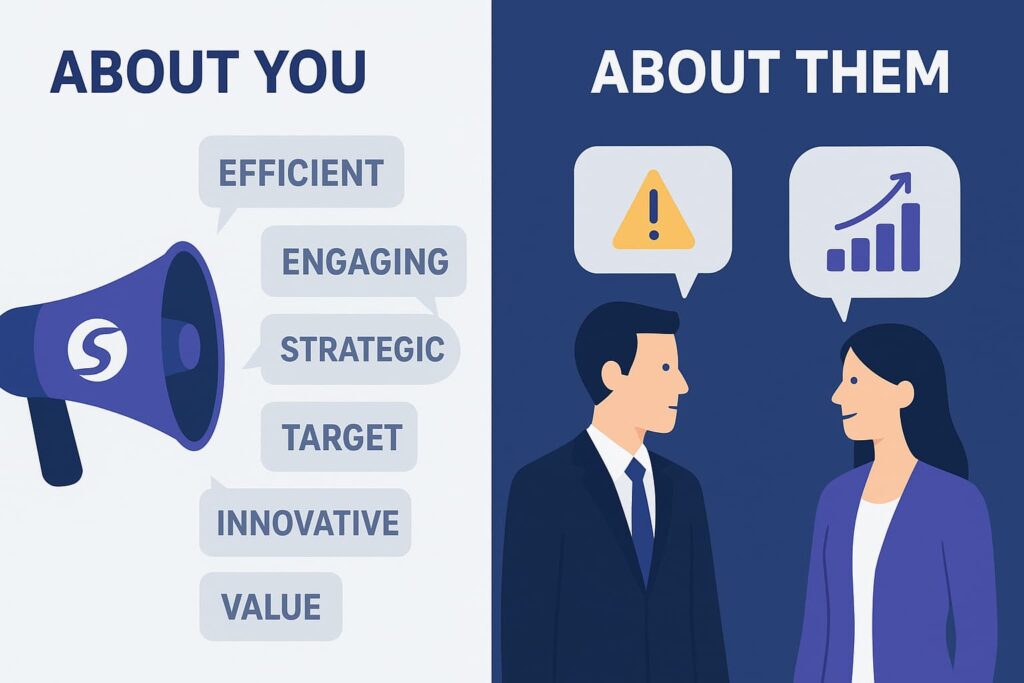
Here’s the painful truth: buyers ignore your content because it isn’t about them. It’s about you.
You know the type. Pages filled with your brand’s favorite buzzwords. Case studies that read more like self-congratulations than problem-solving stories. Blog posts written for algorithms, not people.
But here’s the thing: your buyers aren’t looking for slogans, or pages of jargon, or walls of data without context. They’re looking for help. Progress. A way forward.
Let’s break it down.
Relevance Over Reach
The days of “let’s just publish as much as possible” are over. Buyers don’t want to be blasted with generic thought leadership that could apply to any company, anywhere. They want content that mirrors their specific pain points. Think less “5 Trends in Digital Transformation” and more “How Mid-Market Manufacturers Can Use AI to Eliminate Supply Chain Bottlenecks.”
Progress, Not Pages
One of the biggest “aha” moments for marketers is realizing that buyers don’t measure value by word count. They measure it by whether the content moves them forward in their decision-making journey
A two-page checklist that helps a VP of IT convince their CFO to greenlight the budget can be more valuable than a 20-page ebook that leaves them with nothing actionable.
Engagement Comes From Interaction
This is one of the most overlooked aspects of B2B content. Static PDFs can only go so far.

What keeps buyers engaged is when they can take action — test their knowledge, explore a tool, drag-and-drop elements into the right category, or interact with a calculator that shows them their ROI. Even simple knowledge checks in training content can make an enormous difference in engagement and recall. The same principle applies to marketing: people remember what they interact with.
Data Needs Story (and Vice Versa)
A spreadsheet of stats won’t change anyone’s mind. Neither will a fluffy anecdote with no evidence behind it. The magic happens when you combine the two. A clear story anchored by credible data makes content both memorable and trustworthy.
Aha Moments: Rethinking the Role of Content
At this point, it’s worth pausing for a moment. Let’s consider what makes compelling content stand out from forgettable content.
1. Content Overload Isn’t the Problem — Relevance Is
Most B2B buyers aren’t turned off by the amount of content available; they’re turned off by how little of it speaks directly to their challenges. The insight: your buyers will always make time for content that feels relevant and valuable to them.
2. Marketing Content Is Competing With … Everything
Your content isn’t just up against competitors’ whitepapers — it’s up against podcasts, newsletters, and LinkedIn posts from industry peers. The aha moment: you’re not competing on “attention” alone, you’re competing on “attention + trustworthiness + usefulness.”
3. Buyers Don’t Want Content — They Want Progress
A report, webinar, or case study is just a format. What buyers really want is to move forward in their journey: solve a problem, prove ROI to their boss, or gain confidence in a decision. Content that creates progress feels indispensable.
4. Engagement Comes From Interaction, Not Just Information
Static content has its limits. Consider how knowledge checks in training keep learners engaged — content marketing can achieve the same effect. Tools like ROI calculators, assessment quizzes, or even interactive infographics transform passive reading into active participation. The Aha! moment: Interaction makes content more memorable — and more shareable.
5. Data Doesn’t Replace Story — It Amplifies It
Marketers sometimes lean too heavily on statistics, thinking that credibility will win the day. But data without a story is forgettable. The magic comes when numbers are wrapped in a relatable narrative — for example, how a customer cut their reporting time from 10 hours to 1 hour. That’s when buyers connect on both an emotional and rational level.
6. The Best Content Is Built for Repurposing
One whitepaper doesn’t have to stay a whitepaper. You can slice it into blog posts, infographics, LinkedIn carousels, and sales enablement snippets. The Aha! Moment: Marketers who design content with repurposing in mind scale their impact without burning out. When you start thinking this way, content stops being “marketing collateral” and becomes something much more powerful: a tool for helping buyers make real decisions.
How to Create Marketing Content That Buyers Will Actually Read
So, how do you get from theory to execution? Here are the actions that separate effective content marketers from those wasting budget on unread PDFs.
1. Audit what you’ve already got.
Most companies are sitting on a mountain of content that could be repurposed or restructured.
Look at engagement data. Which blog posts get traffic but no conversions?
Which case studies are downloaded but never read? A simple audit can reveal where your gaps – and opportunities – truly lie.
2. Talk to your buyers.
Radical idea, right? But it works. Instead of guessing what your audience wants, pick up the phone. Run short surveys. Ask your sales team what questions consistently arise. Content created with actual buyer input doesn’t just resonate — it builds credibility fast.

3. Build for interaction.
Don’t just publish articles — create tools, assessments, and even light-touch quizzes that pull people in. A “content strategy maturity checklist” or an “ROI calculator” is infinitely more engaging than another long-form brochure. Think like a product designer, not just a publisher.
4. Tell stories with data.
Show how your solution saved a client $2M in operational costs, but tell it through the eyes of the operations director who finally got to sleep at night. Numbers give you proof. Stories make them stick.
5. Design for repurposing.
A single in-depth report can turn into a series of blog posts, LinkedIn carousels, short videos, and sales enablement one-pagers. If you’re only publishing once and moving on, you’re leaving money (and reach) on the table.
The Strategic Payoff

Why go to all this trouble? Because when you create marketing content that buyers actually want to read, you build trust. You shorten the sales cycle. You give your sales team tools that actually help them win deals. And you make your marketing dollars work harder — not just once, but over and over as repurposed, evergreen assets.
The best part? You don’t need to double your content output to get there. You just need to double down on clarity, relevance, and interaction.
Summary & Takeaways
Here’s the straight truth: anyone can publish content. Very few can create marketing content that buyers actually want to read. If you’re tired of guessing, hoping, and watching your carefully crafted pieces gather dust, now’s the time to rethink your approach.
Start with what you’ve got. Talk to your buyers. Build for interaction. Tell stories backed by data. Repurpose like a pro. Do that consistently, and you’ll not only earn attention — you’ll earn trust. And trust is the currency of B2B growth.


Want to Stay Ahead of Your B2B Competitors?
Every marketing professional faces pressure to deliver growth and prove ROI.
We’ve distilled insights from top-tier sources to create a strategic guide that helps leaders like you transform challenges into opportunities.
FAQs
What makes B2B marketing content engaging?
Engaging B2B content is clear, relevant, and helps buyers move forward in their decision process. It avoids jargon, blends data with storytelling, and often includes interactive elements like tools, calculators, or assessments.
How do you create marketing content that buyers trust?
To build trust, prioritize your buyer’s challenges over your brand’s talking points. Use credible data, tell relatable stories, and provide actionable takeaways that demonstrate value rather than self-promotion.
Why is repurposing content important in B2B marketing?
Repurposing maximizes ROI by turning one strong asset into multiple formats — blog posts, infographics, videos, or sales enablement tools. This ensures consistent messaging, expands reach, and saves time while increasing impact.