

Sales Content That Actually Works: Turning Assets Into Engagement and Results
Most B2B sales content fails — either it goes unused by sales or ignored by buyers. The fix isn’t more assets, but smarter ones: aligned to buyer needs, streamlined for sales reps, and built to drive engagement. This article shows how to create sales content that actually works.

If you’re like most B2B marketing and sales leaders, the words “sales content” probably trigger a mix of hope, guilt, and mild panic.
Hope that the content will help sales close deals. Guilt because much of what’s created sits unused in some forgotten shared drive. And panic because your competitors are producing more, faster, and somehow making it stick.
The truth is, creating sales content that genuinely drives engagement is harder than it looks — but it’s not impossible. Done right, it can turn passive prospects into engaged buyers and amplify your ABM efforts in ways that actually matter.
Why Sales Content Often Fails
Here’s the harsh reality: most sales content goes unused. According to CSO Insights, 60% of content created for sales teams is never utilized.
Marketing leaders invest countless hours in crafting brochures, one-pagers, whitepapers, and decks, yet sales reps often find the content irrelevant, generic, or difficult to find.
Another survey from Forrester found that 90% of B2B buyers report that the content they receive doesn’t help them make decisions, while a LinkedIn study notes that 70% of sales content fails to engage buyers at all.
Why does this happen?
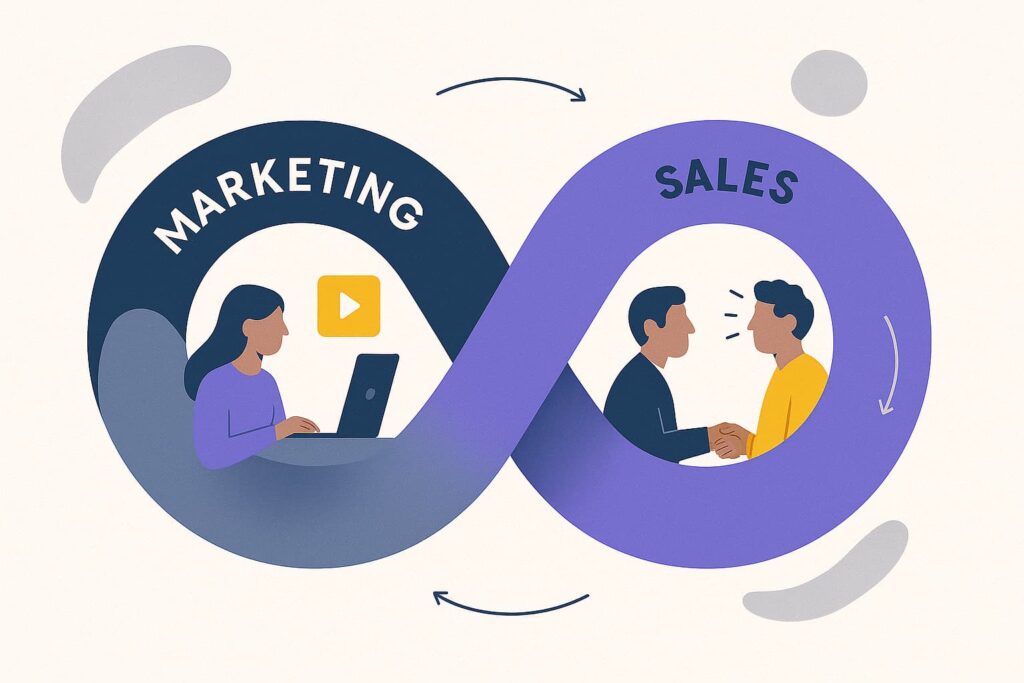
Often, content is created without a clear understanding of what sales needs or what buyers actually value. Teams produce assets for the sake of checking a box, rather than designing them for genuine impact in the real world. The result is an overflowing repository of documents that generate zero traction and frustrate both marketers and sales reps.
Rethink Your Sales Content
Sales content should certainly not be created to mark something off your checklist. They are tools for building relationships and exerting influence. That means every asset should have a clear purpose: to educate, engage, and move prospects closer to a decision.
Quality over quantity becomes the mantra here. Instead of producing dozens of slightly different PDFs or decks, focus on fewer, better-crafted assets. A single whitepaper or explainer video that resonates with a buyer’s pain points can far outperform a library of generic pieces. Context is everything. Align content to the buyer’s journey, persona, and account-specific needs.

An ABM-focused sales team, for example, doesn’t need generic collateral about product features. They need content that speaks directly to the challenges of a specific account, industry, or buyer role.
Tailoring content in this way dramatically increases engagement — and makes it far more likely sales reps will use it.
Another insight is data-driven refinement. Track which pieces of content sales teams actually use, which get forwarded to prospects, and which drive engagement. Analyze what resonates and iterate. Sales content should be a living system, not a static archive.
Action Steps – How to Make Sales Content Effective

So what can marketing and sales leaders do to start turning their sales content into something useful?
Start here:
1. Audit your existing content.
Identify what’s outdated, redundant, or underperforming. Less really is more when it comes to usable content.
2. Map content to buyer journey stages and ABM accounts.
Every asset should serve a specific purpose for a specific persona at a specific stage in the buying process.
3. Collaborate with sales.
Bring reps into the content creation process. Their firsthand experience with prospects ensures that content aligns with real-world selling scenarios.
4. Track engagement and performance.
Use analytics to see what gets opened, shared, or acted upon. Iterate quickly on underperforming pieces.
5. Refine messaging based on buyer feedback.
Content should evolve as you learn what resonates with your audience. A/B test headlines, phrasing, and formats to discover what truly drives engagement.
Practical Examples
Take a B2B company focused on enterprise software. Before revamping their sales content strategy, reps were using a generic product deck that had been in circulation for over two years. Engagement was low, and feedback from prospects was tepid at best.
After collaborating with marketing, they created a small set of account-specific decks, each tailored to a key industry segment.
The decks highlighted pain points, relevant case studies, and clear next steps for each account. Within three months, the sales team reported a 40% increase in content engagement, with prospects more willing to schedule meetings and discuss solutions in detail.

This mirrors our experience across multiple B2B clients: when sales content is thoughtfully crafted, targeted, and refined based on real-world insights, it stops being a nuisance and becomes a true accelerator for pipeline development.
Sales Content Aha Moments

“Less is more.”
Think Mad Men: Don Draper didn’t drown his pitch in statistics; he honed in on the idea that mattered. Your content should do the same.
“Context is king.”
Channel your inner Wolf of Wall Street: each message is powerful when it lands in the right place at the right time.
“Words matter.”
Remember The Social Network: a single line delivered with the right tone can make or break an impression.
These moments serve as reminders: sales content is effective when it’s strategic, concise, contextually relevant, and carefully crafted.
Summary & Takeaways
Sales content is more than just collateral; it’s a tool for engagement, relationship-building, and ABM success.
By auditing existing content, tailoring assets to specific accounts and buyer stages, collaborating with sales teams, and refining content based on real-world performance, B2B organizations can significantly increase the value and impact of their content.
When you approach sales content strategically — focusing on quality, context, and clarity — you stop wasting resources and start creating assets that are actually used, read, and ultimately support sales in closing deals.

It’s not about producing more; it’s about producing better, smarter, and more relevant content that your audience will get value from.

Want to Stay Ahead of Your B2B Competitors?
Every marketing professional faces pressure to deliver growth and prove ROI.
We’ve distilled insights from top-tier sources to create a strategic guide that helps leaders like you transform challenges into opportunities.
FAQs
What is sales content?
Sales content includes presentations, case studies, one-pagers, and other materials designed to help sales teams engage prospects and close deals.
Why does most sales content fail?
Most sales content fails because it’s created without input from sales teams, lacks buyer relevance, or sits buried in repositories where reps can’t easily find or use it.
How can B2B companies make sales content effective?
B2B companies can make their sales content more effective by auditing existing assets, aligning materials with buyer journey stages, collaborating with sales teams, and tracking performance to refine it over time.