

Vertical Marketing Plan: How to Win Big by Going Deep into Your Industry
A vertical marketing plan helps B2B brands win by focusing on specific industries, not generic messaging. By aligning content, proof points, and sales efforts with buyer needs, companies can earn trust more quickly and close deals more efficiently. Going vertical isn’t limiting — it’s how top brands accelerate growth in their target markets.
At a high level, much B2B marketing content can sound similar. Scroll through LinkedIn or sit in on a webinar, and you’ll hear the same buzzwords, the same promises, and the same “solutions” that could apply to almost any company.
The problem is that buyers don’t want “any company.” They want someone who understands their world, their headaches, and their aspirations. That’s where a vertical marketing plan comes in.
Instead of throwing generic messages into the void and hoping they stick, vertical marketing involves delving deeply into specific industries and demonstrating a genuine understanding of them.

The companies that do this well earn credibility faster, win deals faster, and build loyalty that generic campaigns can only dream about.
In this article, we’ll break down why vertical marketing matters, what it takes to do it right, and how you can build a vertical marketing plan that turns heads — and more importantly, turns leads into customers.
The Challenge in Numbers
Here’s the hard truth: buyers don’t have time for marketing that feels irrelevant. A recent Demand Gen Report found that 76% of B2B buyers expect content tailored to their industry. That means three out of four decision-makers won’t even give you the time of day if your message feels like a copy-paste job.

Accenture took this further: 68% of B2B customers are more likely to buy from a company that demonstrates industry-specific expertise. Translation? If you’re not speaking their language, you’re probably losing to someone who is.
The Content Marketing Institute found that 70% of buyers say industry-relevant content is more influential in their purchasing decisions than broad, one-size-fits-all campaigns.
Add it up, and the message is clear: generic messaging doesn’t just fail to impress — it actively hurts your chances. Buyers want proof that you understand their industry, not just their job title.
Why Most B2B Marketing Falls Flat
Here’s a scene you might recognize. A marketing team launches a flashy new campaign with bold creative and clever copy. The ads get some clicks, maybe even generate a few leads. However, when those leads reach the sales team, the conversation often stalls. Why? Because the content might look good on the surface, but it never really spoke to the buyer’s specific challenges.
That’s the “jack-of-all-trades” problem. Trying to appeal to everyone means you end up resonating with no one. It’s like bringing a Swiss Army knife to a surgery. Sure, it technically has the tools, but would you trust it in the operating room? Buyers won’t either.
The companies that stand out are the ones that double down on relevance. They show not only that they understand a problem but that they’ve solved it for others in the same industry. That’s the power of vertical marketing.
The Case for Vertical: Insights That Change How You See the Problem
One of the most common misconceptions about vertical marketing is that it limits your opportunities. The truth is the opposite. Going vertical doesn’t shrink your market — it accelerates your ability to grow within it.
Here are a few perspective shifts that separate winning vertical strategies from the rest:
1. It’s not just about content — it’s about context.
You can have the best whitepaper in the world, but if it doesn’t connect to the specific realities of, say, healthcare IT or financial compliance, it won’t land. Context is what turns good content into powerful content.
2. The best vertical strategies are sales-driven first.
Marketing can’t choose verticals in a vacuum. The best vertical marketing plans are built in tandem with sales, utilizing real data on where deals are being won and lost.
3. Vertical isn’t just another campaign — it’s a business strategy.
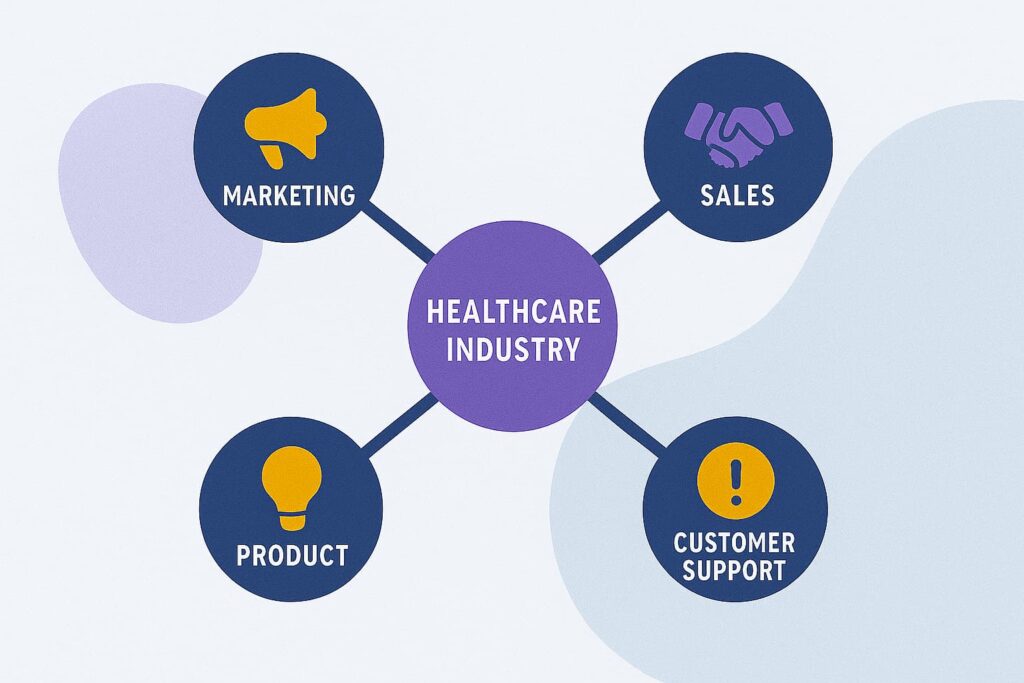
Done right, it influences everything from your product roadmap to your customer support playbook. Marketing just happens to be where the proof shows up first.
4. Proof is the differentiator.
Buyers don’t just want promises; they want evidence. Case studies, benchmarks, and testimonials from peers in their industry carry ten times the weight of generic claims.
These aren’t just theoretical insights. They’re the rules of the game if you want to win with a vertical marketing plan.
Building a Winning Vertical Marketing Plan

So, how do you actually pull this off? Let’s walk through the process.
1. Narrow Your Focus Before You Scale
First, choose your focus industries wisely. That doesn’t mean picking the ones that “sound good” in the boardroom. It means looking at data: where are your sales already gaining traction? Where are your competitors investing heavily? Which industries are most likely to feel the pain your product solves?
2. Build Buyer Journeys for the Top Personas
Second, map the buyer journey in that industry. A healthcare CIO doesn’t evaluate software the same way a manufacturing plant manager does. Their pain points, decision criteria, and risks are entirely different. Understanding that journey is the foundation of a vertical marketing plan.
3. Tailor Messaging and Proof Points
This is where the magic happens. Instead of a single generic case study, build a library of industry-specific case studies. Show how your solution solved compliance headaches for a financial services firm or helped a logistics company streamline operations. The more specific, the better.
4. Align Sales and Marketing Around the Vertical Strategy
A vertical strategy can fall apart if marketing creates great assets but sales doesn’t know how to use them. That means training reps with industry-specific talk tracks, arming them with vertical decks, and ensuring every touchpoint feels connected.
5. Measure and Optimize
Vertical marketing isn’t a one-and-done effort. Track which assets resonate, which industries exhibit faster deal velocity, and which require additional investment. Use that feedback loop to refine and double down where it matters.
Mini Case Studies: Words That Won in Vertical Campaigns
Let’s bring this to life with a couple of examples.
Salesforce is the poster child for vertical marketing. Instead of selling one-size-fits-all CRM software, they created “industry clouds” tailored to specific sectors, such as healthcare, finance, and government. By speaking the language of each vertical, they didn’t just sell software — they sold trust.

Or take Adobe. Their pivot to positioning Creative Cloud for specific industries (like media and entertainment or education) helped them demonstrate relevance beyond “design tools.” They demonstrated how their platform addressed industry-specific workflows, winning over buyers who might have otherwise overlooked them.
Even mid-market SaaS companies see results. One software company we know restructured its case study library by industry, rewriting customer stories to emphasize the problems and results that mattered most in healthcare, retail, and manufacturing. Conversion rates jumped because prospects finally saw themselves in the story.
These aren’t magic tricks. They’re proof that when you align words with the buyer’s world, deals follow.
Aha! Moments for Smarter Vertical Strategy
1. Vertical Isn’t About Limiting — It’s About Accelerating
Many companies resist focusing on verticals because they fear it will narrow their market. However, in reality, vertical specialization often accelerates growth by sharpening your message and strengthening your credibility. When you sound like an insider in a prospect’s industry, you’re no longer “selling” — you’re solving.

2. It’s Not Just About Content — It’s About Context
A generic case study might be impressive, but unless it’s framed in the context of a prospect’s industry, it won’t resonate as deeply. The magic of a vertical marketing plan is in reframing existing proof points in a way that feels tailored, personal, and industry-specific.
The insight here: you don’t always need more content — you need smarter context.
3. The Best Vertical Strategies Are Sales-Driven First
Marketers often think vertical strategy begins with campaign ideas, but the most effective plans actually start with sales. By mining sales conversations for objections, stories, and recurring challenges in each industry, marketing can build content that feels like it was written directly for that buyer’s daily reality.
4. Vertical Isn’t Just “Another Campaign” — It’s a Business Strategy
A vertical marketing plan is bigger than a marketing play. It can (and should) influence product development, partnerships, pricing, and customer experience. When executed well, it doesn’t just create better leads — it creates a stronger business footprint in that market.
5. The Proof Is the Differentiator
In horizontal marketing, you often compete on features and benefits. In vertical marketing, the differentiator is proof: industry-specific case studies, testimonials, benchmarks, and results.
The aha moment here: buyers don’t just want to know your solution works — they want to know it works for companies like theirs.
The Evolving Nature of Vertical Marketing
Vertical marketing isn’t static. As buyers’ expectations evolve, so must your approach.
McKinsey found that 71% of B2B buyers now expect a “consumer-like” experience. That means personalization isn’t optional — it’s expected. Add the rise of AI, and the bar for relevance will only get higher. Buyers don’t just want content that speaks to their industry; they want it delivered in formats and channels that mirror the consumer experiences they’re used to.
The takeaway is simple: vertical marketing is no longer a nice-to-have strategy. It’s the baseline for competing in B2B. Companies that ignore it will be left behind by those who take the time to go deeper.
Your Next Step in Going Vertical
The days of broad, one-size-fits-all B2B marketing are over. Buyers expect relevance, proof, and context — and a vertical marketing plan is how you deliver it.
The good news? You don’t need to reinvent your entire marketing engine overnight.
Start by reframing what you already have: rewrite a case study to emphasize industry results, align with sales to pick one high-potential vertical, or map out a vertical-specific buyer journey. Each step builds momentum.


Want to Stay Ahead of Your B2B Competitors?
Every marketing professional faces pressure to deliver growth and prove ROI.
We’ve distilled insights from top-tier sources to create a strategic guide that helps leaders like you transform challenges into opportunities.
FAQs
What is a vertical marketing plan?
A vertical marketing plan is a strategy that targets specific industries with tailored content, messaging, and proof points. It aligns marketing and sales to resonate with buyer challenges, increasing credibility, engagement, and conversion rates.
Why should B2B companies go vertical?
Going vertical allows companies to demonstrate industry expertise, build trust, and differentiate themselves from competitors. Vertical marketing accelerates growth by focusing efforts where deals are most likely to close.
How do you measure success in vertical marketing?
Measure success by tracking engagement, lead conversion, and deal velocity within each targeted vertical. Monitor which content, case studies, or proof points influence buyer decisions, then optimize based on performance.