

How to Create Explainer Videos That Engage B2B Audiences and Drive Results
Creating explainer videos helps B2B brands simplify complex solutions, engage audiences, and generate leads. The key is balancing clarity with storytelling — not overwhelming viewers with jargon, but showing them why your solution matters. This article breaks down how to plan, script, and oversee explainer videos that deliver measurable results.
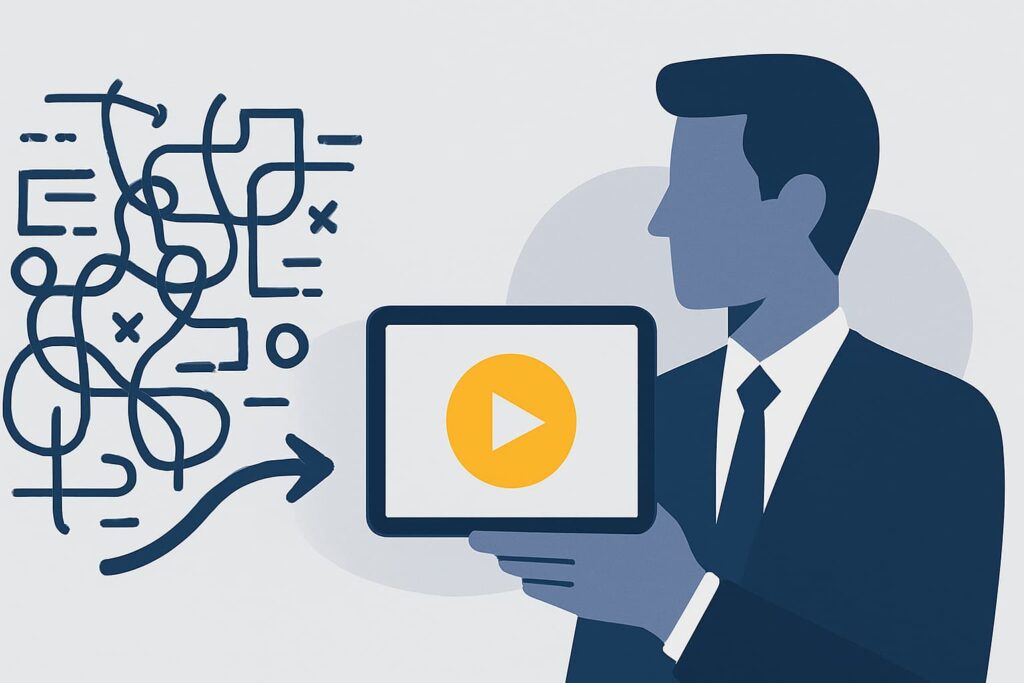
Here’s another way to say it. Creating explainer videos for B2B audiences is akin to translating an intricate instruction manual into a concise, compelling narrative that actually holds people’s attention and interest.

In a world where your prospects are bombarded with email after email, post after post, and pitch after pitch, a well-crafted explainer video can cut through the noise. But here’s the catch: most companies fail at this. Their videos are either too dry, too technical, or simply forget to answer the key question their audience is asking: “Why should I care?”
The good news is that with thoughtful planning, precise scripting, and careful production oversight, you can create explainer videos that actually engage your audience, clarify your message, and move prospects closer to your brand. In this article, we’ll show you how.
Why Explainer Videos Are a Critical B2B Tool
B2B buyers today are juggling more information than ever. According to Wyzowl’s 2025 Video Marketing Statistics report, 86% of businesses now use video as a marketing tool; yet, 63% of marketers admit that creating engaging content is a challenge.
For complex solutions, where your product might have multiple layers of functionality, explainer videos offer a chance to simplify the story and illustrate value in ways that text alone can’t.
An explainer video gives you the opportunity to show rather than tell, to demonstrate a process, or visualize a benefit that words on a slide can never fully capture. And while these videos might not always close a deal on the spot, they play a crucial role in raising awareness and generating leads, helping prospects understand your solution and keeping your brand top of mind.
Common Pitfalls in Explainer Video Creation
Even seasoned marketers stumble when it comes to creating explainer videos. One of the most frequent mistakes is overloading the video with technical specs or industry jargon. Your audience doesn’t need a PhD in your product; they need a clear picture of how it solves their problems.
Another misstep is prioritizing visuals over messaging. Stunning animation is great, but if the story is muddled, the video won’t stick. Similarly, pacing and voice-over delivery often get overlooked. A rushed or monotone narration can turn a brilliant script into background noise.
Finally, many B2B companies fail to plan their story with the audience in mind. Explainer videos need to convey a single, clear message in a concise amount of time — typically 30, 60, or 90 seconds. Every second counts, so trimming unnecessary details and focusing on value is critical.
Core Steps to Creating Effective Explainer Videos
Planning: The Foundation of Success

Every effective explainer video begins with a solid plan. Start by defining your objective. Are you trying to increase awareness, educate prospects, or guide them toward a specific action? Identify your audience and consider the questions they may be asking. What problems are they trying to solve, and what outcomes do they value most?
Set clear metrics for success before production begins. Will success be measured by view counts, leads generated, or engagement on your website? These benchmarks will guide your creative decisions and ensure your video delivers meaningful results.
Scripting: The Art of Clarity
Once the plan is in place, the next step is scripting. Writing a script for an explainer video is not just about conveying information; it’s about crafting a story that resonates with your audience.
Focus on clarity over complexity. Technical details should be distilled into plain language that illustrates the benefit to the viewer. Highlight outcomes, not just features. Every line of dialogue should serve the story and help the viewer understand.
Voice-over is an often underestimated part of this process. The right pacing, tone, and emphasis can make a complex concept feel approachable. Working closely with voice talent to get the audio right ensures that your message lands with the intended impact. Even small tweaks – such as emphasizing certain words or phrases – can make a significant difference in comprehension.

Overseeing Production: Bringing It All Together

Production oversight is where planning and scripting come alive. This doesn’t mean doing everything yourself, but rather ensuring that every element supports the story. Collaborate with animators and editors to maintain visual consistency and make sure each visual reinforces the narrative.
Your oversight can also help ensure timing and pacing match the script. In short-form explainer videos, every second counts. By carefully reviewing visuals and voice-over takes, you can make certain the story is delivered efficiently, clearly, and memorably.
Insights to Maximize Video Impact
Here’s where the “aha moments” come in. First, clarity always beats flash. Don’t let gorgeous visuals overshadow the story. Your viewers should walk away understanding your solution, not dazzled by your design skills.
Second, your narrative is as important as your visuals. Human brains respond to stories, so use real-world scenarios or examples to illustrate your points. This makes your solution tangible and relatable.
Finally, test and iterate. The first version of a video is rarely perfect. Gather feedback, analyze engagement metrics, and refine your content to improve its performance.
Storytelling Secrets from Film That Boost Engagement
1. Show, Don’t Tell.
A classic problem in both storytelling and explainer videos is conveying value without merely reciting facts. For instance, in The Wizard of Oz (1939), when Dorothy meets the Scarecrow, the Tin Man, and the Lion, each character demonstrates their traits through action, rather than exposition. This mirrors how explainer videos should convey a solution’s benefits visually and through story, rather than just narrating them.
2. Simplify Complex Problems.
Explainer videos often need to take a complex solution and make it immediately understandable. Apollo 13 (1995) echoes the historic line, “Houston, we have a problem.” This immediately sets up a complex scenario, but the film then shows step-by-step problem-solving in a way the audience can follow. So, just as the film breaks down complicated technical challenges into understandable beats, a good explainer video does the same for a B2B solution.
3. Aim to Get Viewers’ Attention Quickly.
Explainer videos have only seconds to hook the viewer, much like films must capture the audience immediately. In Jaws (1975), the opening scene immediately grabs attention with tension and action, before any explanation is provided. In an explainer video, the first 5-10 seconds must pull the viewer in, showing stakes or impact before diving into the solution.
Quick Actions You Can Take Today
You don’t need to overhaul your entire content strategy to start improving your explainer videos. Begin by reviewing your existing content. Are your current videos clear and concise, or do they rely too heavily on technical details? Rework scripts to emphasize value and outcomes, not just product features.
Collaborate with voice talent early to ensure your phrasing, pacing, and emphasis convey the right tone. Plan for continuous improvement: iterate based on metrics like completion rates, shares, or leads generated.

By focusing on planning, scripting, and oversight, you can elevate your explainer videos without requiring an interactive or gamified approach.
Summary & Takeaways

Creating explainer videos that truly engage B2B audiences isn’t about flashy graphics or jargon-filled scripts — it’s about clarity, narrative, and thoughtful execution.
By focusing on planning, scripting, and production oversight, you can craft videos that inform, captivate, and support lead generation.

Want to Stay Ahead of Your B2B Competitors?
Every marketing professional faces pressure to deliver growth and prove ROI.
We’ve distilled insights from top-tier sources to create a strategic guide that helps leaders like you transform challenges into opportunities.
FAQs
What makes a good B2B explainer video?
A strong B2B explainer video clearly explains how a solution solves a problem, uses plain language instead of jargon, and keeps content concise. Engaging visuals and a clear narrative help audiences connect with the message.
How long should an explainer video be for B2B?
The ideal length for a B2B explainer video is 60–90 seconds. This timeframe keeps attention while allowing enough space to explain value. Shorter videos work for awareness, while slightly longer formats may support education or demos.
What are common mistakes in creating explainer videos?
Common mistakes include overloading with technical details, using unclear scripts, and neglecting pacing or voice-over quality. Effective videos prioritize clarity, storytelling, and audience-focused messaging.