

B2B Website Copywriting Secrets: How Top Brands Turn Words into Leads
B2B website copywriting turns your website into a lead-generating engine by combining clarity, persuasion, and buyer-focused messaging. Top brands structure content to meet buyer needs, use analytics to guide decisions, and continuously refine copy to maximize conversions. Done right, your website doesn’t just inform — it drives measurable growth.
Organizations that view their website as just a brochure are leaving growth on the table. In today’s B2B environment, your website isn’t a static presence — it’s a 24/7 salesperson, a lead generator, and often the first impression a potential buyer will have of your brand.
Despite this, many B2B companies struggle to create website copy that actually drives results. According to a survey by the Content Marketing Institute, 55% of B2B marketers say generating leads and website traffic is their top challenge.
That means more than half of your peers are wrestling with the same problem: their words are failing to convert readers into qualified prospects.

It’s not that teams don’t try. Many marketers spend hours crafting clever headlines, updating product pages, or populating blogs with technical content. However, the reality is that most B2B website copy falls short because it focuses on features rather than benefits, internal priorities over buyer needs, or SEO over readability.
If you want your copy to turn visitors into leads, you need a strategy that blends clarity, persuasion, and data-driven insight.
Put the Copywriting Challenge In Perspective
B2B buyers today are more informed than ever. Gartner reports that buyers complete 70% of their decision-making process before engaging with sales.
Meanwhile, HubSpot research indicates that 61% of B2B marketers identify lead generation and website traffic as their primary challenges.

According to Forrester, companies that fail to optimize their content for the buyer’s journey lose more than half of their potential leads to competitors who communicate more effectively.
When you look at these numbers, the stakes are clear: weak website copy isn’t just an annoyance — it’s a direct threat to growth. Every unclear headline, every jargon-laden paragraph, and every missed opportunity to guide a reader toward action costs your organization in terms of engagement, leads, and revenue.
Yes, You Too Can Improve Your Website Copywriting
SalesTactics.org implemented a targeted copywriting strategy for a stock trading software client, focusing on creating compelling headlines and clear calls to action. This approach resulted in a remarkable $600,000 in sales within a single week, underscoring the direct impact of strategic website copy on revenue generation.
Rethinking B2B Website Copywriting
So how do top-performing B2B brands get it right? It starts with a mindset shift. Website copy isn’t decoration or collateral — it’s an engine for conversions. Every word must earn its place by driving clarity, trust, and action.
One of the first “aha moments” for teams making this shift is realizing that clarity often beats cleverness. Buyers don’t want to decipher your messaging; they want to quickly understand whether your solution addresses their problem.
Another key insight is the importance of adopting a buyer-centric approach. Your copy should reflect the world of the buyer — their pain points, goals, and decision-making process — rather than your internal org chart or product features.

This perspective makes copy more persuasive, naturally guiding readers toward the next step without being pushy.
And finally, data should inform every word. Analytics reveal which pages engage visitors, which headlines grab attention, and where readers drop off. Combining analytics with thoughtful messaging allows marketers to refine their copy iteratively, creating content that not only attracts traffic but converts it into qualified leads.
Actions You Can Take to Improve Your Copy
The good news is that improving website copy isn’t a nebulous task. There are concrete steps you can take today.
1: Audit Existing Copy
First, audit your existing content to identify areas for improvement. Examine bounce rates, time on page, and conversion metrics to identify where visitors lose interest. Often, you’ll find that a few small tweaks — a more compelling headline, a clarified value proposition, or a stronger call-to-action — can make a measurable difference.
2: Clarify Your Value Proposition
What does your company uniquely offer, and why should a prospect care? The best B2B website copy spells this out immediately, ideally within the first few sentences of a page. Remember, in B2B contexts, decision-makers are busy; clarity saves time and builds trust.
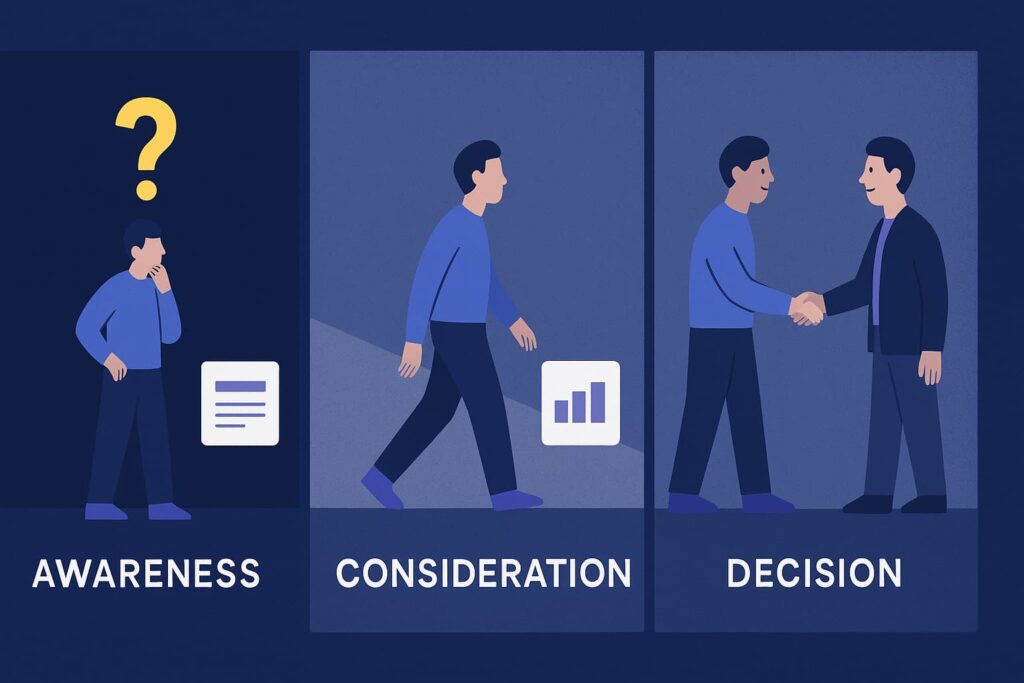
3: Map Copy to Buyer Journeys
Awareness-stage visitors need educational, thought-leadership-driven content. Consideration-stage buyers respond to case studies, comparisons, and proof of ROI. And decision-stage visitors need compelling reasons to choose your solution now.
Tailoring your copy to these stages ensures that your website supports buyers at every stage of their journey.
4: Optimize for SEO & Readability
Using keyphrases like “website copywriting,” “B2B website copy,” or “lead generation B2B” helps search engines understand your content, while keeping it human-readable ensures that visitors stick around. Scannable formatting, descriptive subheadings, and concise paragraphs improve engagement and lower bounce rates.
5: Test, Iterate, and Refine
Even the best copy benefits from refinement. A/B testing headlines, CTAs, and page layouts provides actionable insights. Over time, these incremental improvements compound, resulting in measurable increases in traffic, engagement, and leads.
Common Mistakes to Avoid
Many B2B teams fall into predictable traps. Overloading pages with jargon or technical terms alienates readers.
Treating copy as static rather than iterative limits performance gains.
Ignoring mobile users and accessibility creates friction that drives visitors away.
Prioritizing SEO over human-centered writing often produces content that ranks but doesn’t convert.
Recognizing these pitfalls helps you avoid them while shaping a more effective strategy.
Lessons From Top Brands
High-performing B2B websites share common traits. They lead with clarity, they anticipate buyer questions, and they use storytelling to illustrate value. They integrate social proof — from testimonials to client logos — and clear, action-oriented calls to action. Most importantly, they monitor results and continuously refine copy based on real-world feedback.
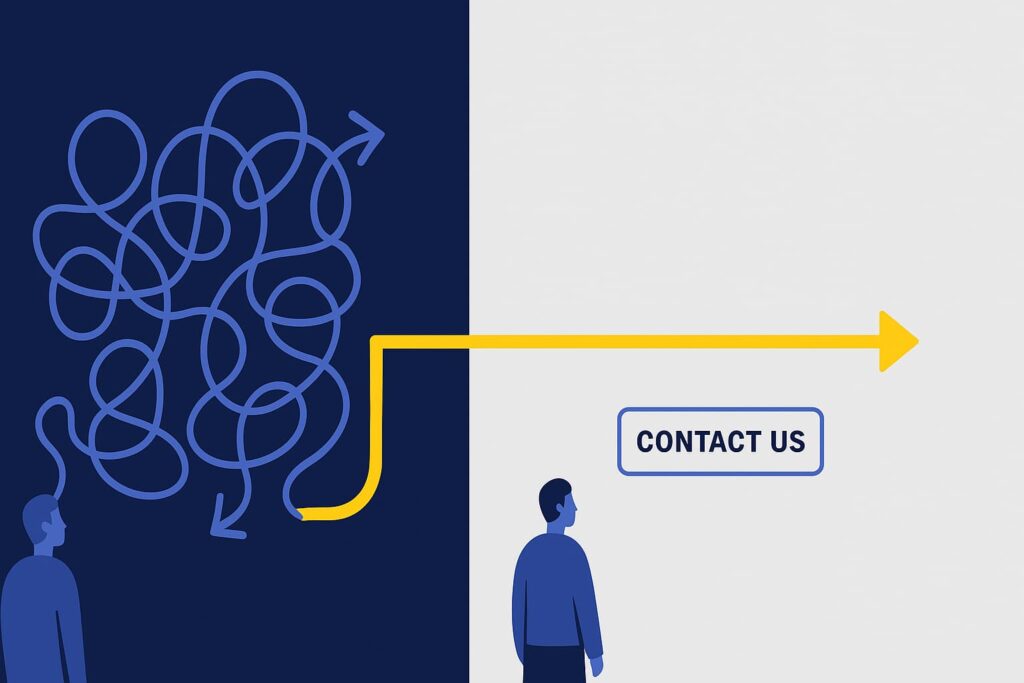
Consider a mid-sized B2B software company that saw a 40% increase in demo requests simply by restructuring its homepage copy. They clarified the headline, simplified the messaging, and placed a prominent CTA above the fold. No additional traffic was needed — better copy alone drove measurable growth.
Quick Wins for Your Website Today

If you’re ready to take action, start small. Audit one high-traffic page and identify the single largest opportunity for improvement. Test a new headline, adjust one CTA, or remove confusing jargon.
Each of these changes can improve conversions while providing insight into what resonates with your audience. Over time, scaling these wins across your website compounds into significant results.
Summary & Takeaways
Website copywriting is more than just writing; it’s a strategic discipline that drives growth. By thinking like a buyer, prioritizing clarity, leveraging analytics, and iteratively refining messaging, B2B marketers can transform their websites into lead-generating engines.
Every high-performing B2B brand understands that words matter. They turn website copy into a tool for connection, persuasion, and measurable results. The question isn’t whether you should invest in better copy — it’s whether you’re ready to start turning words into leads today.


Want to Stay Ahead of Your B2B Competitors?
Every marketing professional faces pressure to deliver growth and prove ROI.
We’ve distilled insights from top-tier sources to create a strategic guide that helps leaders like you transform challenges into opportunities.
FAQs
What is B2B website copywriting?
B2B website copywriting is crafting online content that communicates your brand’s value to professional buyers, guides them through the decision-making process, and encourages action. It balances clarity, buyer-centric messaging, and SEO to generate leads and improve conversion rates.
How can B2B companies improve website copy?
Begin by auditing existing pages, clarifying value propositions, and aligning content with the buyer’s journey. Utilize analytics to monitor engagement, refine headlines and CTAs, and continually improve copy. The goal is to convert visitors into qualified leads without sacrificing readability or trust.
What mistakes should marketers avoid in B2B copywriting?
Common pitfalls include overusing jargon, focusing on features rather than benefits, treating copy as static, overlooking mobile accessibility, and prioritizing SEO over human-centered messaging. Avoiding these ensures copy engages readers and drives results.